Most people think orthodontic treatment means straightening crooked teeth for a more confident smile. While aesthetics motivate many of our patients, your bite alignment—how your upper and lower teeth fit together—plays an even more critical role in your long-term oral health. A misaligned bite, or malocclusion, creates uneven enamel wear, leads to jaw pain, and even makes chewing or speaking difficult.
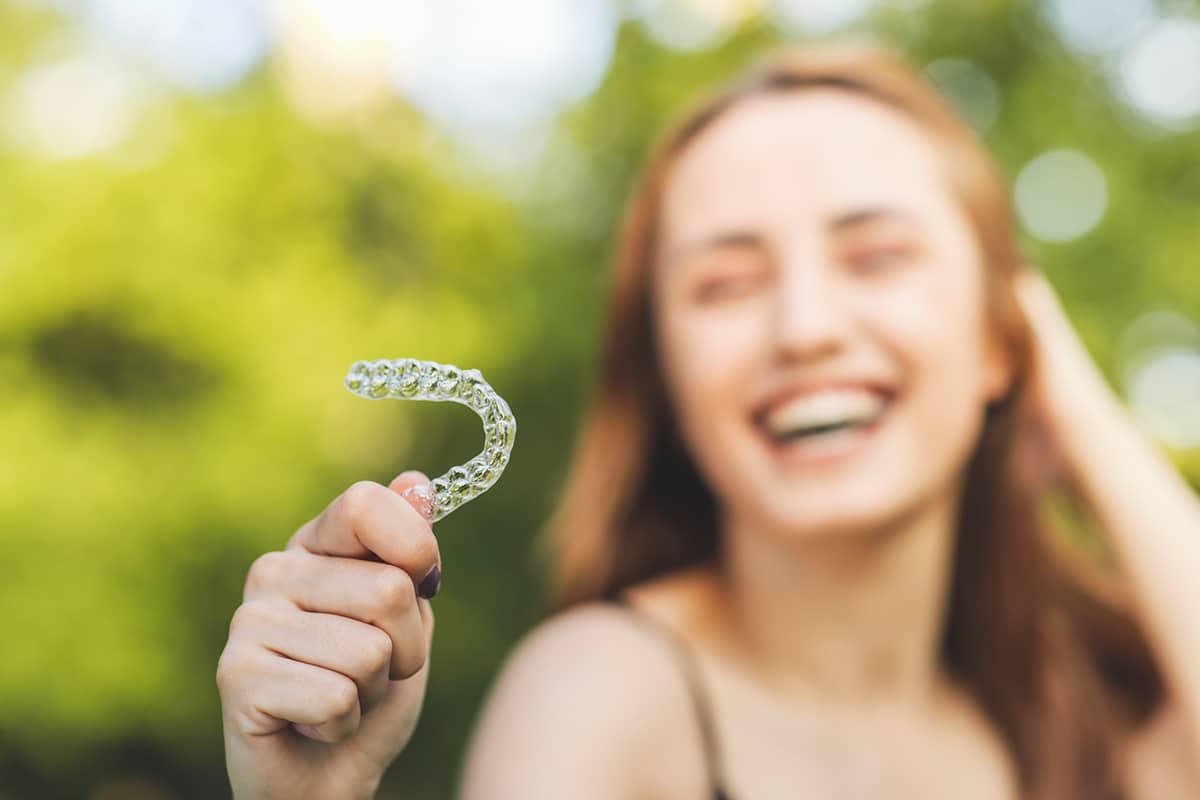
Fortunately, modern orthodontics has evolved significantly. We don’t rely solely on metal brackets and wires to fix these structural problems anymore. Today, we use Invisalign® as a powerful tool in our office to correct mild to moderate bite issues.
Many patients visit us to ask whether clear aligners have enough strength to move the jaw into alignment or to fix complex bite problems. We assure them that they do. Using advanced 3D imaging and our proprietary SmartTrack material, these aligners deliver a controlled, consistent force to specific teeth. We use this force to guide complex movements that not only straighten the visible "social six" front teeth but also improve the relationship between the upper and lower arches. In this guide, we explain exactly how this technology solves common bite issues without traditional metal hardware.
Fixing Overbites and Deep Bites
An overbite happens when the upper front teeth significantly overlap the lower front teeth. A slight overlap is normal, but a deep overbite often causes gum trauma and accelerates wear on the lower teeth. In difficult situations, the lower teeth may bite into the roof of the mouth. We correct overbites not only to improve your smile but also to prevent long-term damage to soft tissues and tooth structure. When we use clear aligners to correct an overbite, we apply pressure to push the front teeth slightly back into the gums (intrusion) and, if needed, pull the back teeth down to level the bite (extrusion).
The Mechanics of Correction
For mild to moderate overbites, we use specific features built into the aligners. In some cases, we attach "precision wings" or elastic attachments—small, tooth-colored buttons bonded to the teeth — that anchor rubber bands, similar to those used with traditional braces. These elastics apply the necessary force to shift the lower jaw forward or move the upper teeth back, correcting Class II malocclusion. The clear aligner material also gives us vertical control, which braces sometimes struggle to achieve, and it keeps the bite from deepening during treatment. Because the plastic covers the biting surfaces of the teeth, it prevents the molars from over-erupting, which helps us manage vertical bite issues effectively.
Correcting Crossbites for Better Function
We often see crossbite as a common issue, where one or more upper teeth sit inside the lower teeth when you bite down. This problem may occur on the sides of your mouth (posterior crossbite) or in the front (anterior crossbite). If you leave a crossbite untreated, your jaw may shift to one side, which can result in lopsided jaw growth in younger patients and TMJ (temporomandibular joint) pain in adults. You also risk creating uneven pressure that may cause gum recession and bone loss around the affected teeth.
Expanding the Arch
We expand the upper arch so the upper teeth sit properly in front of the lower teeth. Clear aligners handle this task effectively. We design your treatment plan to widen the dental arch gradually. Each set of trays grows slightly wider than the last, pushing specific teeth outward into their correct positions. Because the aligners grip the teeth fully, we apply torque to the roots and ensure the teeth move bodily rather than just tip outward. We consistently achieve highly predictable results for mild-to-moderate posterior crossbites. If a single tooth sits trapped behind a lower tooth (anterior crossbite), the aligners create space to move that tooth forward, eliminate traumatic interference, and restore healthy bite function.
Addressing Open Bites
An open bite means the upper and lower teeth do not touch when you close your mouth. You usually see this as a gap between the front teeth, though it can also occur in the back. Habits such as thumb sucking or tongue thrusting often lead to open bites. This condition makes it difficult to bite into foods such as sandwiches or apples and often leads to speech impediments, such as a lisp.
The Intrusion Effect
Clear aligners often correct open bites more effectively than traditional braces. Traditional braces sometimes cause teeth to extrude and make an open bite harder to close. Clear aligners, however, cover the chewing surfaces of the back teeth and naturally create an intrusion effect on the molars. When you bite down on the plastic trays throughout the day, you apply a mild force that pushes the back teeth slightly into the jawbone. This "posterior intrusion" lets the front teeth close together more easily. The plastic trays also help retrain the tongue and discourage tongue-thrusting habits that may have caused the open bite. By controlling the vertical dimension of the bite, we close the gap and restore full functionality to the front teeth.
The Long-Term Benefits of Bite Correction
Correcting your bite goes far beyond achieving a photogenic smile; you invest in the longevity of your teeth and jaw joints. When you have proper bite alignment, you distribute chewing force evenly across all your teeth. Even distribution protects enamel and prevents the premature wear that untreated malocclusion often causes. You also relieve strain on the TMJ, which can help reduce chronic headaches or jaw tension.
Straight teeth and a healthy bite make daily cleaning much easier. Crowded or overlapping teeth trap plaque and bacteria, raising your risk of cavities and gum disease. When we align your teeth and correct your bite, we help you clean your teeth more thoroughly each day. If you want to avoid metal braces, consider clear aligner therapy. This discreet, comfortable, and highly effective solution addresses many mild-to-moderate bite issues we treat every day.
Frequently Asked Questions About Invisalign
How long does it take to correct a bite issue with clear aligners?
Your treatment time depends on the complexity of your bite issue. If you have very mild spacing or crowding, you may finish treatment in as little as 6 months. If you need to correct overbites, crossbites, or open bites, plan for 12 to 18 months. This timeline matches, or sometimes beats, the duration of traditional braces. For best results, wear your aligners 20 to 22 hours every day. Since you can remove the trays, your commitment to consistent wear will determine your success.
Is the treatment more painful than metal braces?
Most of our patients find clear aligners more comfortable than traditional metal braces. You won’t deal with metal brackets or wires that poke or irritate the inside of your cheeks and lips. However, the process is somewhat sensitive because moving teeth requires force. When you switch to a new set of aligners—usually every week or two—you’ll likely feel pressure or tightness for the first day or two. This sensation means the aligners work to move your teeth and bite into the correct position. You can usually manage this mild discomfort with over-the-counter pain relievers, and it fades quickly as your mouth adjusts to each new tray.
We serve families and individuals across the Greater Hartford area as Greater Hartford Orthodontics, a premier orthodontic practice. We create healthy, beautiful smiles through personalized treatment plans, which include traditional braces and advanced clear aligner therapy. If you want to improve your bite and your confidence, please visit our website and contact us to schedule your consultation today.