Choosing to straighten your teeth is a significant step toward improving your smile and oral health. For many of our patients, a primary concern is the appearance of their orthodontic treatment. The desire for a less noticeable solution often leads to a common question: which is more discreet, clear braces or Invisalign? Both are excellent options designed to be far less visible than traditional metal braces, but they have key differences in appearance and function that can influence which one feels more discreet to you.
At our practice, we believe in empowering you with detailed information so you can make the best decision for your lifestyle and smile goals. Understanding the nuances of each treatment will help you feel confident in your choice. In this post, we'll explore the factors that contribute to the discretion of both clear braces and Invisalign, from the materials they are made from to how they fit into your daily life. Let's delve into the details to see which option offers the subtler path to a perfect smile.
Understanding the Visibility of Clear Braces
What Are Clear Braces?
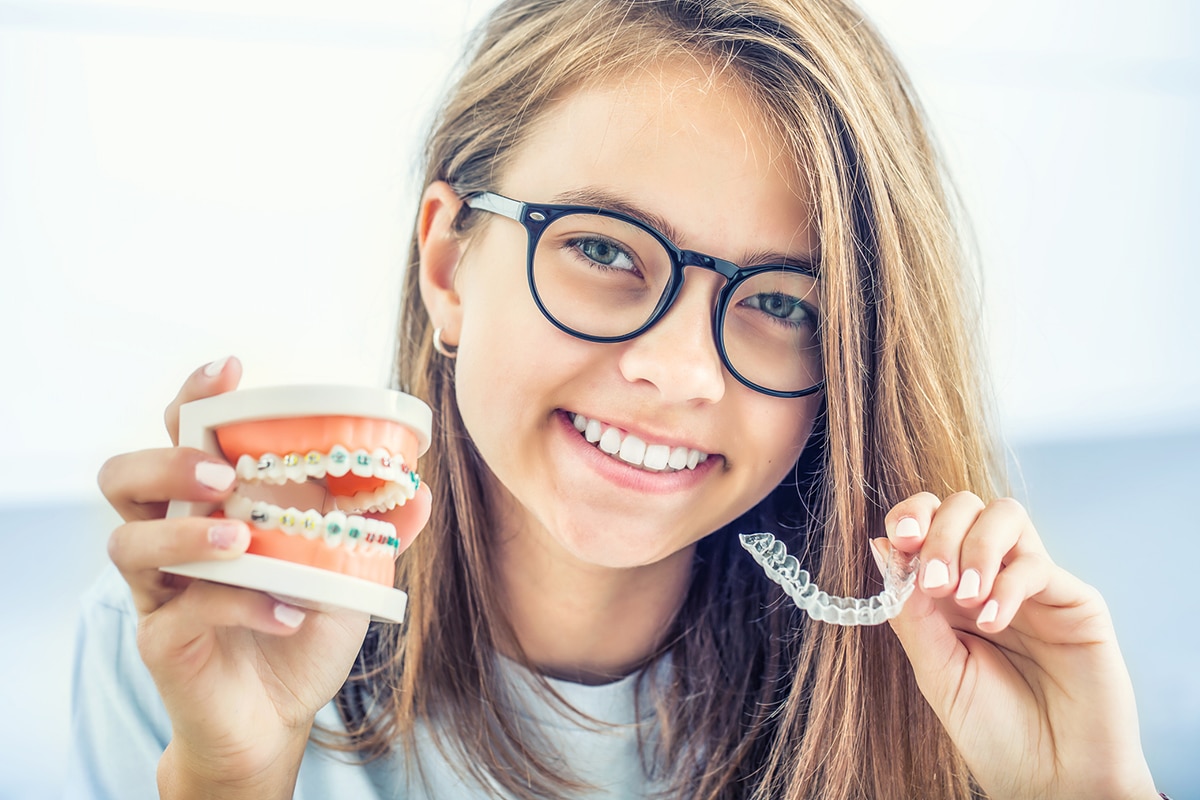
When people think of braces, the image of metal brackets and wires often comes to mind. However, orthodontic technology has advanced significantly, leading to the development of more aesthetic alternatives. One of the most popular is ceramic, or clear braces. This system functions much like traditional braces, using brackets and an archwire to guide teeth into their correct positions.
How Do Clear Braces Work?
The key difference lies in the materials. The brackets are made from a translucent or tooth-colored ceramic material that blends in with the natural shade of your teeth, making them much less conspicuous.
From a distance, many people may not even notice you are wearing them. Up close, the brackets are visible, but their subtle appearance is a significant advantage.
Additional Components and Considerations
It's essential to consider the other components, too:
- The archwire that connects the brackets is typically still made of metal, though tooth-colored or "frosted" wires are sometimes available to reduce visibility further.
- Small elastic ligatures used to hold the wire to the brackets can be clear or silver.
- While clear elastics offer greater discretion, they can stain from foods and drinks such as coffee, tea, red wine, or curry.
This potential for discoloration is a factor to weigh when considering the overall discretion throughout your treatment.
The Subtle Nature of Invisalign Aligners
Invisalign® represents an entirely different approach to teeth straightening. Instead of brackets and wires, this system uses a series of custom-made, clear plastic aligners to move your teeth. These aligners are made from a patented thermoplastic material called SmartTrack®, designed to be both durable and virtually invisible. Each set of aligners is worn for about one to two weeks before progressing to the next set in the series, with each new tray applying precise, gentle pressure to shift your teeth incrementally.
The primary advantage of Invisalign in terms of discretion is that the aligners are completely transparent and fit snugly over your teeth. There are no brackets to stand out or wires to catch the light. For many, this makes Invisalign the winner in the discretion category. However, there's another element to consider: attachments. To achieve complex tooth movements, small, tooth-colored composite buttons may be bonded to certain teeth. These attachments act as handles, giving the aligner something to grip for more effective force application. While these attachments match your tooth color, they can make the aligners slightly more noticeable when in place. Despite this, the overall appearance of Invisalign is typically considered more subtle than any type of braces.
Daily Life: How Each Option Impacts Discretion
The discretion of your orthodontic treatment isn't just about how it looks, but also how it integrates into your daily life. Here, clear braces and Invisalign present very different experiences. With clear braces, the appliance is fixed to your teeth and remains in place 24/7. This means you eat, drink, and go about your day without ever removing them. While this eliminates the need to remember to wear your appliance, it also means you must be mindful of your diet. Hard, sticky, and chewy foods can damage the brackets, and pigmented foods and drinks can stain the elastic ties, making the braces more noticeable. Oral hygiene also requires extra effort, as you'll need to clean carefully around each bracket and under the wire.
Invisalign, on the other hand, is removable. You must take the aligners out for eating, drinking anything other than water, and brushing your teeth. This freedom means there are no dietary restrictions, and you can maintain your oral hygiene routine with ease. However, this removability comes with responsibility. For the treatment to be effective, you must wear the aligners for 22 hours a day. Taking them out in social situations, such as for a meal or a coffee break, can draw attention to your treatment. You'll also need to be diligent about cleaning your aligners and carrying a case with you. For some, the act of removing and reinserting aligners in public may feel less discreet than having a fixed appliance that simply stays put.
Pros and Cons at a Glance
- Clear Braces
- Pros: Fixed in place, no need to remove for meals, effective for a wide range of cases, less noticeable than metal braces.
- Cons: Brackets and archwires can still be visible up close; elastics may stain; dietary restrictions apply; requires careful oral hygiene.
- Invisalign
- Pros: Nearly invisible aligners, removable for meals and cleaning, no dietary restrictions, and easy to maintain oral hygiene.
- Cons: Attachments may make them slightly more noticeable; must be worn 22 hours a day; may require removal in public, which can draw attention.
Making the Right Choice for Your Smile
Ultimately, deciding between clear braces and Invisalign comes down to your personal preferences and orthodontic needs. If your highest priority is a treatment that is as close to invisible as possible, and you don't mind the potential for small, tooth-colored attachments, Invisalign is likely the more discreet choice. The clear, removable aligners are nearly invisible, offering a subtle way to straighten your teeth.
However, if you prefer a "set it and forget it" approach and are concerned about the discipline required to wear removable aligners for 22 hours a day, clear braces are an excellent, low-profile alternative. The ceramic brackets blend well with your teeth, providing a significant aesthetic improvement over traditional metal braces. They offer the reliability of a fixed appliance while still being far less noticeable. We are here to provide a comprehensive evaluation and discuss which option aligns best with your clinical needs and personal comfort, ensuring you feel confident and happy throughout your journey to a new smile.
Frequently Asked Questions About Clear Braces
How do I prevent clear braces from staining?
Preventing stains on clear braces primarily involves being mindful of your diet and maintaining excellent oral hygiene. The ceramic brackets themselves are highly resistant to staining. The primary concern is the clear elastic ties that hold the archwire in place. To keep them looking their best, we recommend limiting consumption of staining foods and drinks, such as coffee, tea, red wine, curry, and tomato-based sauces. Rinsing your mouth with water after meals can also help. Most importantly, diligent brushing and flossing will remove plaque and food particles that can cause discoloration. Since these elastics are changed at every adjustment appointment, any staining is temporary.
Are clear braces as effective as metal braces?
Yes, clear braces are just as effective as traditional metal braces. They work on the same biomechanical principles, using brackets and an archwire to apply steady pressure to move teeth into their ideal alignment. Clear braces can treat a wide range of orthodontic issues, from simple crowding to complex bite problems, with the same level of precision and efficiency as their metal counterparts. The primary difference is the material of the brackets, which is chosen for aesthetics rather than function. You can trust that choosing clear braces will not compromise the quality or outcome of your orthodontic treatment.
At Greater Hartford Orthodontics, we provide advanced orthodontic solutions for patients throughout the Greater Hartford area. Our team works to create a welcoming and supportive environment where you can achieve the smile you’ve always wanted. To learn more about your treatment options, please contact us to schedule a consultation.